Post Office Saving Schemes 2026: Complete Guide
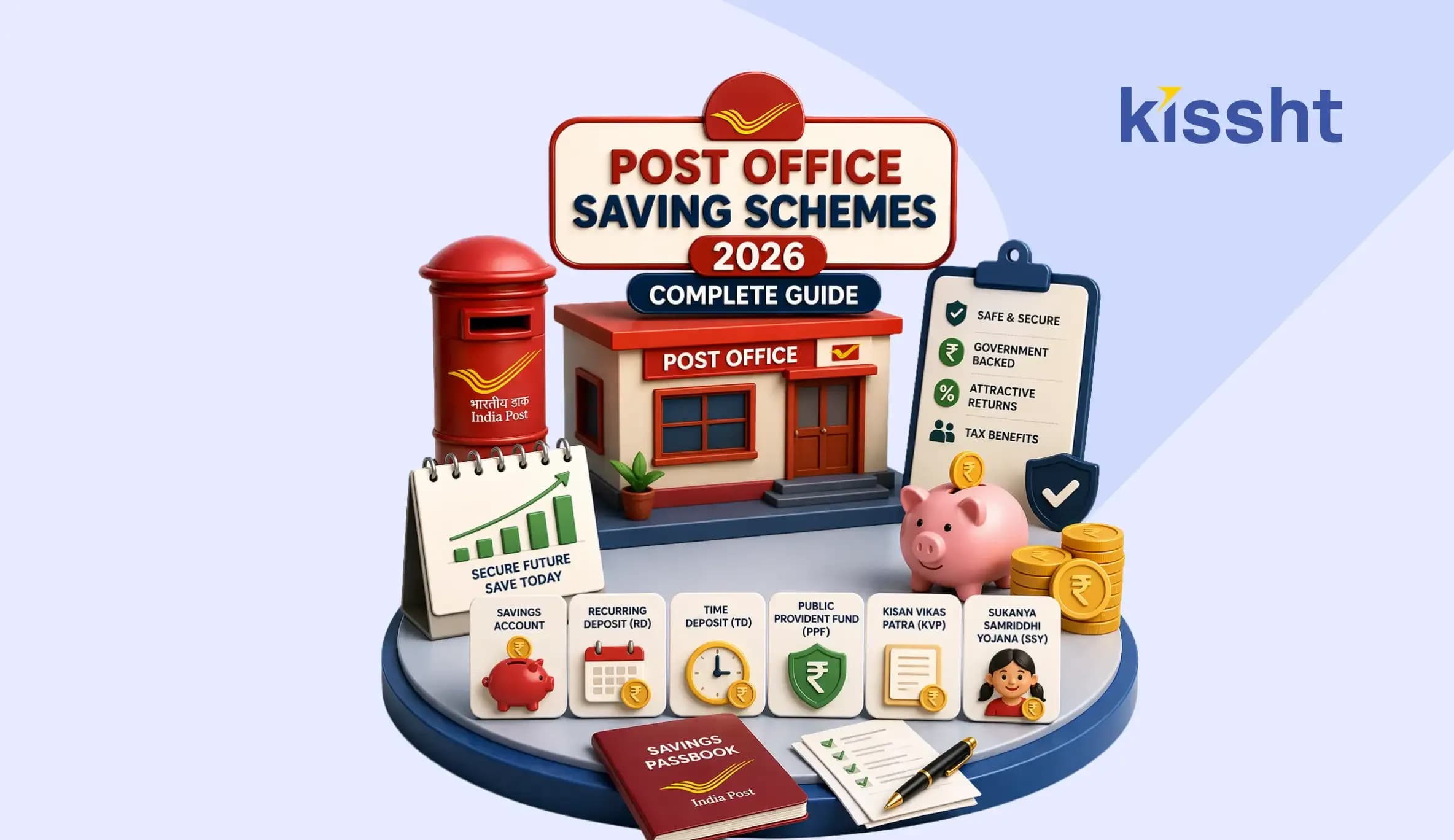
Post office saving schemes continue to be a popular choice for individuals looking for stable and structured investment options. Backed by the Government of India, these schemes are designed to offer predictable returns, making them suitable for conservative investors and long-term financial planning.
From options like the Post Office Monthly Income Scheme (POMIS) to the Post Office Recurring Deposit Scheme and the Post Office Time Deposit Scheme, these plans cater to different financial goals. Whether you’re exploring the India Post saving schemes for regular income or long-term growth, understanding how each scheme works can help you make better financial decisions.
What Are Post Office Saving Schemes
Post office saving schemes are government-backed investment options offered through India Post. These schemes are designed to encourage savings while providing safe and steady returns.
They cater to different investor needs, including income generation, wealth accumulation, and tax-saving benefits.
Types of Post Office Saving Schemes
-
Post Office Savings Account
This is one of the simplest forms of savings with easy access to funds. The post office savings account interest rate is modest but offers safety and liquidity for everyday financial needs.
-
Post Office Recurring Deposit Scheme
The Post Office Recurring Deposit Scheme allows individuals to invest a fixed amount monthly. It is ideal for disciplined saving and building a corpus over time with compounded returns.
-
Post Office Time Deposit Scheme
Also known as the Post Office Fixed Deposit Scheme, this option offers fixed returns over specific tenures. It is suitable for individuals seeking a predictable income with minimal risk.
-
Public Provident Fund (PPF)
The Post Office PPF scheme is a long-term investment option with tax benefits. It is widely used for retirement planning due to its compounding effect and government backing.
-
Post Office Monthly Income Scheme (POMIS)
The Post Office Monthly Income Scheme (POMIS) provides a fixed monthly income. It's ideal for individuals looking for a regular income, especially retirees.
-
Sukanya Samriddhi Yojana
The Post Office Sukanya Samriddhi Yojana is designed for the financial security of a girl child. It offers tax benefits and attractive interest rates, which makes it a preferred long-term investment.
Benefits of Post Office Saving Schemes
-
Government-Backed Security
All post office schemes are backed by the Government of India, making them one of the most secure investment options. This reduces risk and provides confidence to investors.
-
Stable and Predictable Returns
These schemes offer fixed or stable interest rates, ensuring consistent returns. This makes them suitable for risk-averse investors.
-
Wide Accessibility
Post office schemes are available across urban and rural areas. This ensures financial inclusion and accessibility for a large population.
-
Tax Benefits
Certain schemes like PPF and Sukanya Samriddhi Yojana offer tax advantages. This helps investors save on taxes while building long-term wealth.
Choosing the Right Post Office Scheme
Selecting the right scheme depends on your financial goals, risk appetite, and investment horizon.
Key Factors to Consider
- Investment tenure
- Expected returns
- Liquidity requirements
- Tax benefits
Understanding these factors helps you align your investments with your financial objectives.
Role of Financial Planning Alongside Savings
While post office schemes provide stable returns, individuals may sometimes need liquidity for urgent or short-term requirements.
In such cases, options like a personal loan can help bridge temporary financial gaps. Digital platforms and a reliable loan provider like Kissht can offer quick access to funds when required. However, it is important to evaluate repayment capacity and use borrowing as a complementary financial tool rather than a primary strategy.
Popular Post Office Schemes
| Scheme | Tenure | Returns Type | Ideal For |
|---|---|---|---|
| Savings Account | Flexible | Low, fixed | Daily transactions |
| Recurring Deposit | 5 years | Compounded | Regular savings |
| Time Deposit | 1 to 5 years | Fixed | Secure investment |
| PPF | 15 years | Compounded | Long-term wealth |
| POMIS | 5 years | Monthly income | Regular income |
| Sukanya Samriddhi Yojana | Long-term | High, compounded | Girl child savings |
Why Post Office Schemes Remain Important in 2026
Post office savings schemes continue to play a crucial role in financial planning due to their stability and accessibility. In an environment where market-linked investments may fluctuate, these schemes offer consistency and reliability. For individuals seeking low-risk investment options, they remain a dependable choice for building long-term financial security.
FAQs
Q1. What are the best post office saving schemes in 2026?
Some of the most popular saving schemes include the Post Office Monthly Income Scheme (POMIS), Public Provident Fund (PPF), and Post Office Time Deposit Scheme. Each scheme serves different financial goals, such as regular income, long-term savings, or tax benefits.
Q2. Which post office scheme gives a monthly income?
The Post Office Monthly Income Scheme is specifically designed to provide a regular monthly income. It is suitable for individuals looking for a stable income source, especially retirees or those seeking predictable returns.
Q3. Are post office schemes safe to invest in?
Yes, India Post saving schemes are backed by the Government of India, making them highly secure. They are considered suitable for conservative investors who prioritise safety and stable returns over high-risk investments.





Instant Loans at Your Fingertips


Personal Loan
Fast, hassle-free loan for your personal needs.

Business Loan
Fuel your business growth with quick approvals.

Loan Against Property
Unlock your property’s value with ease.

Credit Pulse
Boost your credit score with smart insights.

Track your credit score
Simply enter your mobile number to get a quick overview of your credit score.
Check Now

Related articles
Apr 23, 2026
DAY-NRLM Scheme Explained: Full Form, Benefits, Eligibility & How It Works

Apr 23, 2026
Learner Licence Apply Online: Registration, Slot Booking & Test Process Explained
Apr 22, 2026
How to Apply for a PAN Card for Minor in India: Step-by-Step Guide

Apr 26, 2026
How to Use AI to Make Money in the Stock Market
Apr 25, 2026
CSIS Scheme Explained: Eligibility, Benefits & How to Apply (2026 Guide)

Apr 19, 2026
What is BNPL? Meaning, Benefits & How Buy Now Pay Later Works in India

Apr 19, 2026
How to Transfer Money from Credit Card to Bank Account

Apr 19, 2026
Pradhan Mantri Viksit Bharat Rozgar Yojana: Complete Guide

Apr 19, 2026
What is an Overdraft Facility? Meaning, Features & Benefits in India

Apr 19, 2026
How to Change Name in Passport: Step-by-Step Process

Apr 19, 2026
How to Download CBSE 10th Result on DigiLocker

Apr 19, 2026