Top Government Schemes for Starting a Business in India 2026: A Complete Guide
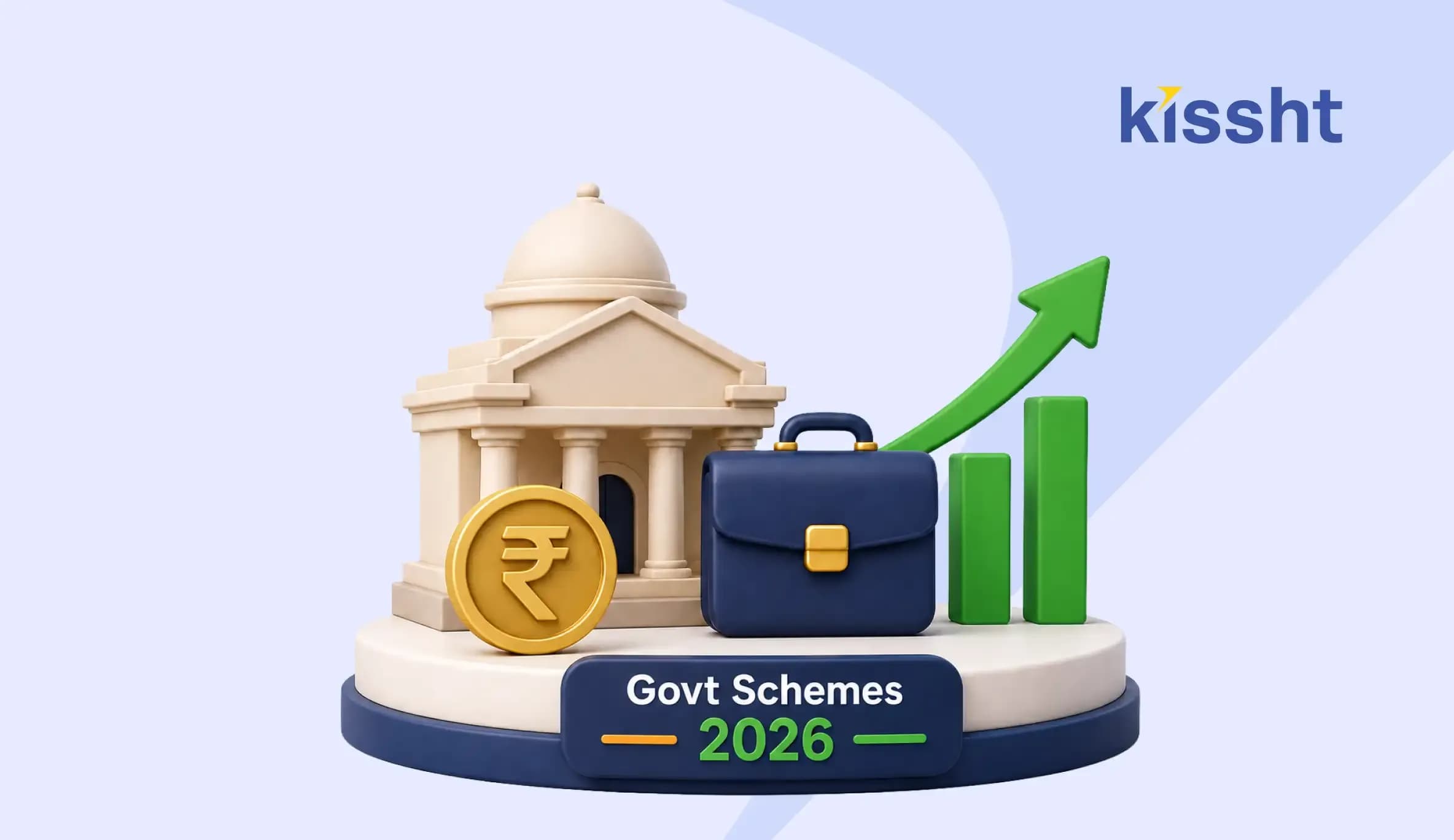
Starting your own business in India has never had more government support behind it. From subsidised loans and free skill training to tax exemptions and market access programmes, the Indian government runs dozens of schemes specifically designed to help first-time entrepreneurs get off the ground.
The challenge is not the lack of support. The challenge is knowing which schemes exist, who qualifies and how to actually apply. This guide cuts through the complexity and gives you a practical, up-to-date overview of the most valuable government benefits available to aspiring business owners in 2026.
Why Government Schemes Matter for First-Time Entrepreneurs
Starting a business requires capital, mentorship, market access and legal infrastructure. For most first-time entrepreneurs in India, access to affordable capital is the single biggest barrier. Government schemes address this directly through:
- Collateral-free business loans at subsidised interest rates
- Capital subsidies that reduce the effective cost of investment
- Credit guarantees that make banks more willing to lend to new businesses
- Free or subsidised skill development and business training
- Dedicated portals and single-window clearance to reduce registration friction
Top Central Government Schemes for Business Starters in 2026
1. PM Mudra Yojana (PMMY)
The Pradhan Mantri Mudra Yojana is one of the most widely used government business loan schemes in India. It offers collateral-free loans through banks, NBFCs and microfinance institutions under three categories:
| Category | Loan Amount | Best For |
|---|---|---|
| Shishu | Up to Rs 50,000 | Very early stage, micro businesses |
| Kishore | Rs 50,001 to Rs 5 lakh | Established micro businesses scaling up |
| Tarun | Rs 5 lakh to Rs 10 lakh | Small businesses with growth track record |
Mudra loans are available to non-farm, non-corporate micro and small enterprises. No collateral is required. Apply through any scheduled commercial bank, regional rural bank or NBFC.
2. Stand-Up India Scheme
The Stand-Up India scheme provides bank loans between Rs 10 lakh and Rs 1 crore to at least one SC or ST borrower and one woman borrower per bank branch for setting up a greenfield enterprise in manufacturing, services or the trading sector. It is one of the most accessible government business loan schemes for those from underrepresented communities.
3. PM SVANidhi (Street Vendor Scheme)
PM SVANidhi provides working capital loans to street vendors to help them resume livelihoods and graduate to formal credit systems. Loans start at Rs 10,000 with access to enhanced credit of up to Rs 50,000 on timely repayment. Digital transactions attract a cashback incentive under the scheme.
4. MSME Credit Guarantee Scheme (CGTMSE)
The Credit Guarantee Fund Trust for Micro and Small Enterprises (CGTMSE) enables banks to extend collateral-free credit to MSME borrowers. The trust guarantees up to 85% of the loan amount, significantly reducing the bank's risk and making lenders more willing to approve loans to new businesses without assets to pledge.
5. Startup India Initiative
The Startup India initiative by DPIIT offers registered startups a range of benefits:
- Income tax exemption for three consecutive years out of the first ten years
- Self-certification compliance under labour and environmental laws
- Fast-track patent examination at a 80% fee rebate
- Access to a Rs 10,000 crore Fund of Funds for startup investment
- Single-window clearance through the Startup India Hub
6. Atal Innovation Mission (AIM)
AIM supports innovation-driven entrepreneurs through Atal Incubation Centres (AICs), Atal Tinkering Labs (ATLs) and seed funding for deep-tech startups. If your business has a technology or innovation component, AIM's incubation support and grant funding can be transformative.
Key State-Level Schemes to Know
Every state in India runs additional startup and MSME support schemes. Some of the most notable include:
| State | Flagship Scheme |
|---|---|
| Maharashtra | Maharashtra Startup Policy: equity support, incubation and tax incentives |
| Tamil Nadu | TANSIM: seed funding and mentorship for state-registered startups |
| Karnataka | Karnataka Startup Policy: grants up to Rs 50 lakh for early-stage startups |
| Gujarat | iCreate and Student Startup Innovation Policy for young entrepreneurs |
| Delhi | Delhi Startup Policy: rent subsidies and market access for registered startups |
Check your state's MSME or Industries department website for the most current scheme details, eligibility criteria and application links.
How to Apply for Government Business Schemes in India
Most schemes are accessible through the following portals:
- MSME Udyam registration mandatory for most MSME schemes
- Startup India DPIIT recognition and scheme access
- PM Mudra Yojana applications through partner banks
- Stand-Up India scheme applications and tracking
- Street vendor loan applications
Bridging the Gap with Kissht
Government loans are valuable but can take time to process. If you need working capital quickly while your scheme application is under review, offer instant personal loans online with same-day disbursal, no collateral and flexible EMI options. Use the EMI Calculator to plan your bridge financing before applying.
Conclusion
India's government business support ecosystem in 2026 is more developed than ever before. Whether you need a collateral-free Mudra loan for a micro enterprise, startup recognition through DPIIT or state-level grants and incubation support, the opportunities are real and accessible. The first step is registration. The second step is applying. And if you need fast, flexible capital to complement government support, it is here to help.
Frequently Asked Questions
Q1. Which is the best government scheme to start a small business in India?
For micro and small businesses, PM Mudra Yojana is the most accessible starting point with collateral-free loans up to Rs 10 lakh. For tech startups, the Startup India initiative offers tax benefits and funding access. Choose based on your business type and capital need.
Q2. Do I need to register my business to access government schemes?
Yes, in most cases. MSME Udyam Registration is required for MSME-specific schemes. Startup India recognition from DPIIT is needed for startup benefits. Both registrations are free and done online.
Q3. Can I apply for multiple government business schemes at the same time?
Yes, in many cases. Some schemes are complementary. For example, you can have Udyam registration and apply for a Mudra loan while also accessing CGTMSE credit guarantee support through your bank.
Q4. How long does it take to get a Mudra loan approved?
Mudra loan approval timelines vary by lender. Banks typically take 7 to 15 working days. NBFCs and fintech lenders can be faster. Ensure you have all documents ready (business registration, identity proof, bank statements) to avoid delays.
Q5. What if I am not eligible for a government scheme? Can I still get a business loan?
Yes. offers instant personal loans online that can be used for business purposes including working capital, inventory, equipment and digital tools. Apply via the Personal Loan App with minimal documentation and same-day disbursal.




Instant Loans at Your Fingertips
Apply nowPersonal Loan
Fast, hassle-free loan for your personal needs.

Business Loan
Fuel your business growth with quick approvals.

Loan Against Property
Unlock your property’s value with ease.

Credit Pulse
Boost your credit score with smart insights.

Track your credit score
Simply enter your mobile number to get a quick overview of your credit score.
Check Now
Related articles

Jun 20, 2026
Best 5-Star Hotels in New Delhi: Top Luxury Stays Across Delhi
Jun 27, 2026
E-Challan Status Check Online: Complete Guide
Jun 20, 2026
AI ML Engineer Salary in India: Monthly Income, Skills and Career Scope

Jun 25, 2026
Best Raksha Bandhan Gift Ideas for Sister
Jun 25, 2026
Manage Your Monthly Budget with Ease Using Smart Household Finance Apps
Jun 20, 2026
PAN Card Update Online: Step-by-Step Process
Jun 20, 2026
How to Download Udyam Certificate Online in 2026
Jun 19, 2026
How to Apply for an International Driving Permit (IDP) in India in 2026
Jun 17, 2026
UAN Activation: What Is a UAN and How Do You Activate It?
Jun 13, 2026
Dormant Account: Meaning & Reactivation Steps
Jun 14, 2026
RC Transfer: Transfer Car Ownership Online - Step-by-Step Process
Jun 17, 2026