CIF Full Form in Banking: Meaning, Uses & Importance Explained
When you open a bank account, you receive several numbers like the account number, the IFSC code, and sometimes a CIF number. Many customers notice it printed on their passbook or bank statement, but are unsure what it actually means or why it matters.
Understanding this number is important because it connects all your banking relationships under one profile.
CIF Full Form in Banking
The full form of CIF is Customer Information File. In banking, a CIF number is a unique identification number assigned to every customer.
In simple terms, it is a central record that stores all your financial details with a bank. The CIF number is usually an 11-digit numeric code. It is generated when you first open an account with a bank. Instead of managing each account separately, lenders use a single CIF ID to link all your accounts, loans, deposits, and services.
CIF Meaning in Simple Words
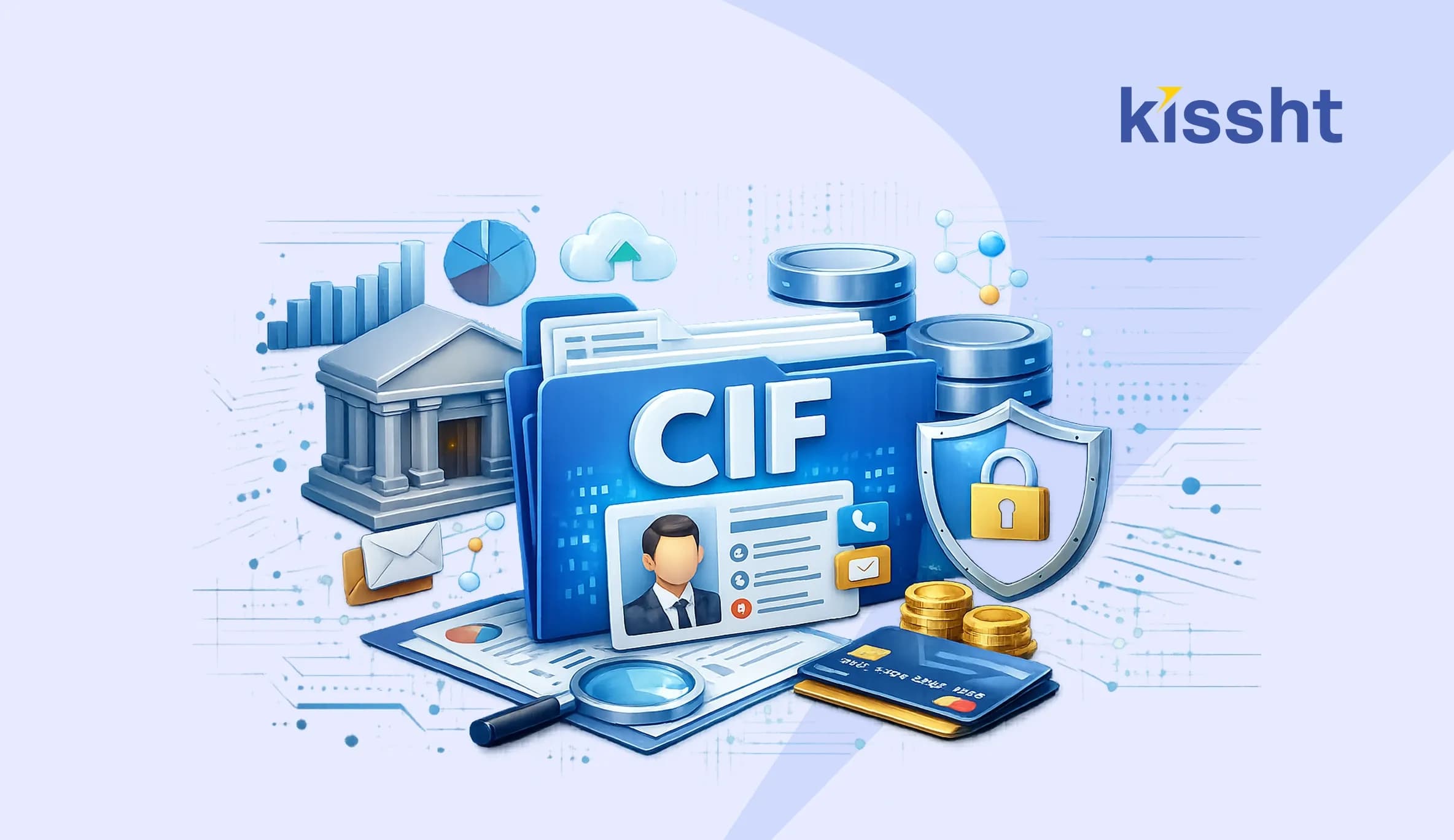
The CIF meaning refers to a digital file maintained by the bank that includes:
-
Personal information
-
Contact details
-
Account details
-
Loan records
-
Credit history
-
KYC details
-
Linked services
In short, the CIF code meaning is a master record of your entire banking relationship.
What Does a CIF Number Contain?
The Customer Information File typically includes:
-
Customer name and address
-
Date of birth
-
PAN and Aadhaar details
-
KYC verification status
-
Savings and current account details
-
Fixed deposits
-
Loan history
-
Credit rating
-
Transaction history
-
Linked Demat accounts
How to Find the CIF Number?
Many customers wonder how to find the CIF number. Here are simple ways:
1. Check Your Bank Passbook
Most banks print the CIF number on the first page.
2. Look at Your Bank Statement
It is often mentioned near your account details.
3. Internet Banking
Log in and visit the profile or account information section.
4. Mobile Banking App
Open your bank app and check your account details.
5. Contact Customer Care
After identity verification, the bank will share it with you.
6. Visit the Branch
Carry a valid ID proof and request your CIF details.
CIF Number vs IFSC Code
Many people confuse CIF with IFSC. They are completely different.
| Feature | CIF Number | IFSC Code |
|---|---|---|
| Purpose | Identifies customer | Identifies bank branch |
| Usage | Internal customer tracking | Used in fund transfers |
| Confidential | Yes | Public |
| Format | Numeric | Alphanumeric |
While the CIF is customer-focused, IFSC is transaction-focused.
Importance of CIF Number
The CIF plays a major role in smooth banking operations.
1. Unified Customer View
All your accounts and loans are linked under one profile.
2. Faster Service
The bank can instantly access your data during transactions.
3. Better Security
Helps prevent identity fraud and duplicate accounts.
4. Easier Loan Processing
Your financial history is readily available to assess eligibility.
How CIF Helps in Loan Applications
When applying for an instant personal loan, banks review your financial profile. Since the CIF connects all your accounts and transaction records, it helps the lender evaluate:
-
Income stability
-
Existing liabilities
-
Repayment behaviour
-
Credit history
Before applying, many borrowers use a loan EMI calculator to estimate monthly repayments and plan finances better.
With digital platforms and an instant loan app, the loan approval process becomes faster because your banking details are already structured under your CIF profile.
Fintech platforms like Kissht also rely on verified customer data for seamless processing. While CIF is maintained by banks, having updated and accurate banking records helps in smoother digital lending approvals.
Advantages of CIF Number
Here are the main benefits:
-
Easy identification across branches
-
Consolidated banking records
-
Quicker loan and credit card approvals
-
Better personalised banking services
-
Simplified account transfers
For banks, it improves customer management. For customers, it ensures faster and safer services.
Why You Should Keep CIF Details Safe
Since the CIF connects all your financial records, it should be treated as confidential information. Do not share it casually.
Always ensure:
-
Your contact details are updated
-
KYC information is correct
-
Bank statements are reviewed regularly
This helps prevent fraud and ensures uninterrupted banking services.
Final Thoughts
The CIF number's importance goes beyond just a banking code. It acts as the backbone of your financial identity within a bank. From account management to loan processing and security verification, it plays a crucial role.
Understanding what a CIF number is helps customers manage their financial records better and ensures smoother interactions with banks and digital lending platforms.
Keeping your banking information updated and secure ensures faster approvals, safer transactions, and a seamless financial experience.
FAQs
Q1. What is the full form of CIF?
CIF stands for Customer Information File. It is a unique number assigned to every bank customer.
Q2. Is the CIF number the same as the account number?
No. The account number identifies a specific account, while CIF links all accounts under one customer profile.
Q3. How can I find my CIF number?
You can find it in your passbook, bank statement, online banking portal, mobile app, or by contacting your bank branch.
Q4. Is the CIF number confidential?
Yes. It contains sensitive financial information and should not be shared publicly.
Q5. Does the CIF number change if I open another account?
No. If you open another account in the same bank, it usually links to the same CIF.





Instant Loans at Your Fingertips


Personal Loan
Fast, hassle-free loan for your personal needs.

Business Loan
Fuel your business growth with quick approvals.

Loan Against Property
Unlock your property’s value with ease.

Credit Pulse
Boost your credit score with smart insights.

Track your credit score
Simply enter your mobile number to get a quick overview of your credit score.
Check Now

Related articles

Feb 23, 2026
What is Kisan Vikas Patra? KVP Scheme Features, Benefits, Interest Rate & Eligibility
Feb 18, 2026
What is the Digital Seva Portal? Registration, Login & Services Explained

Feb 17, 2026
Top 10 TV Brands in India 2026 - Price & Key Features

Feb 23, 2026
Black Friday 2026 Date in India: What Is Black Friday & Why Does Everyone Shop on This Day?
Feb 23, 2026
How to Apply Electric Vehicle Subsidy in India 2026: Eligibility, Amount & Process

Feb 23, 2026
Best Summer Vacation Places in India for a Refreshing Escape

Feb 23, 2026
How to Earn Money Online in 2026: Turning a Side Hustle into Main Income

Feb 23, 2026
International Women’s Day Date: Why Financial Independence for Women Matters in 2026
Feb 19, 2026
Sukanya Samriddhi Yojana: Step by Step Application Process

Feb 8, 2026
Top Super Bikes in India 2026: Price, Mileage & Performance Comparison

Feb 6, 2026
Top 10 Best Cars Below ₹10 Lakhs in India 2026
Feb 9, 2026